
Supporting Our Grid: Building Resilience from the Ground Up
The American utility grid is often called the "largest machine ever built," but it was designed for a different era. Today, this vital infrastructure is under unprecedented stress from age, extreme weather, and a surge in demand that far outpaces its original capacity.
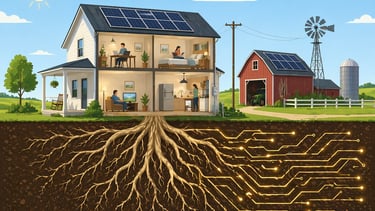
At Rummans Energy, we believe the solution isn't just bigger power plants—it’s a smarter, more localized grid.
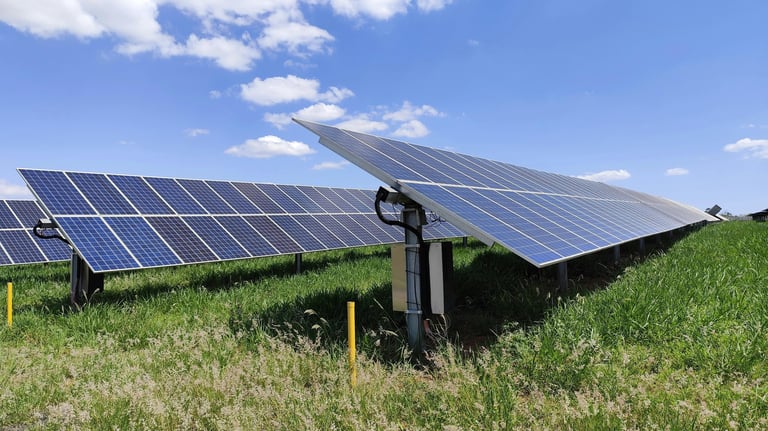
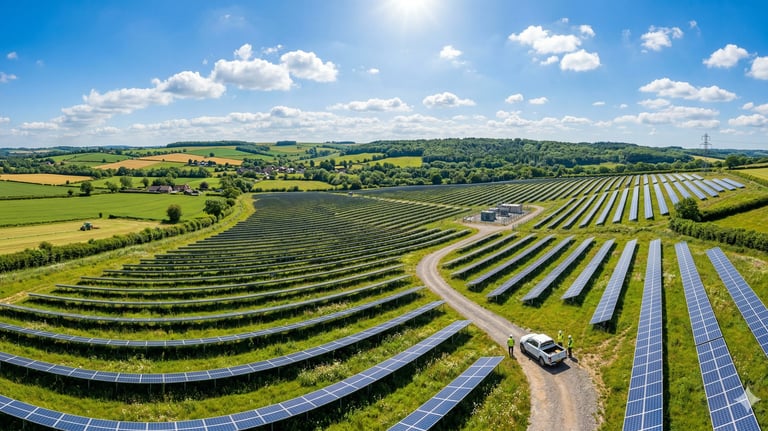
Rural communities need practical energy infrastructure that can support growth, reliability, and long-term economic development. Rummans Energy develops right-sized projects that start with community solar and are evaluated for long-term grid-support value.
We do not claim that one small solar project solves the grid. But well-sited distributed energy projects can contribute to a stronger, more flexible energy system when they are placed near appropriate infrastructure and developed responsibly.
1. An Aging Foundation
Much of the U.S. electrical infrastructure was constructed between 1950 and 1975. While it has served us well for decades, it is now operating well beyond its intended lifespan.
70% of transmission lines in the United States are over 25 years old.
Over 50% of transformers are more than 33 years old.
The American Society of Civil Engineers recently graded the U.S. electrical grid with a D+ due to these infrastructure gaps.
2. A Fragile System in a Changing Climate
As the hardware ages, it becomes increasingly vulnerable to the elements. Extreme weather is now the leading cause of power outages in the United States.
Increasing Outages: The average American now experiences nearly three times as many minutes of weather-related power outages compared to a decade ago (increasing from 109 minutes in 2013-2015 to 297 minutes in 2020-2022).
Economic Impact: These disruptions aren't just an inconvenience; they cost the U.S. economy approximately $150 billion every year.
3. The Peak Demand Challenge
We are using more electricity than ever before. Between the rise of data centers, electric vehicles, and "smart" home technologies, the demand for power—especially during "peak" hours—is skyrocketing.
Skyrocketing Demand: National peak demand is forecast to grow by 166 GW by 2030—a rate six times higher than projections from just two years ago.
The Data Center Surge: By 2030, data centers alone could consume nearly 9% of all electricity generated in the U.S..
Grid Strain: During the hottest and coldest days, our aging grid often nears its breaking point, leading to price volatility and the risk of brownouts.
The Rummans Energy Approach
Distributed Generation
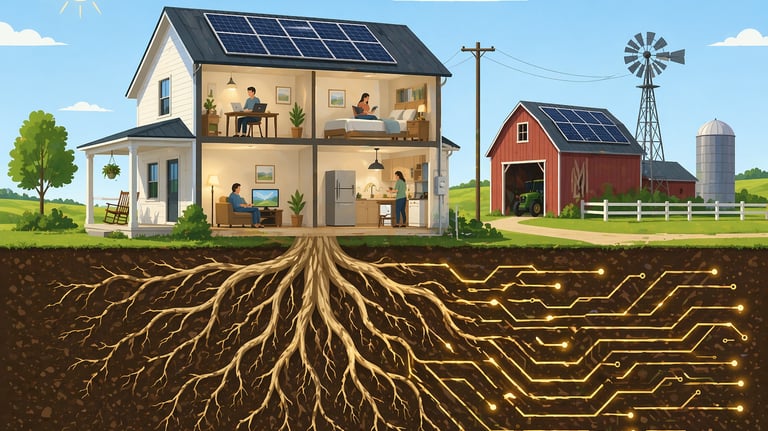
Producing energy closer to where it is used can reduce dependence on distant infrastructure and create local energy value.
Interconnection-First Development
We screen sites based on proximity to electric infrastructure, feeder conditions, utility requirements, and technical feasibility.
Storage Optionality
Battery storage may be evaluated for select future projects where it improves project economics, grid-support value, or interconnection flexibility.
Rural Economic Development
Energy infrastructure can help rural communities compete for future investment, support public institutions, and create long-term landowner income.
Rummans Energy’s development process begins with interconnection and site fundamentals. We evaluate proximity to existing infrastructure, feeder conditions, parcel layout, landowner objectives, permitting requirements, and future grid-support optionality before advancing a project.
Utility Dive/ASCE (2025): US energy infrastructure gets a D+ from ASCE
Epicenter Insights (2025): Electric Grid Resiliency Overview
U.S. Senate Joint Economic Committee (2024): How Renewable Energy Can Make the Power Grid More Reliable
U.S. Department of Energy (2024): Distribution Transformers: Preparing for Growth Demand
National Renewable Energy Laboratory (NREL): Distribution Transformer Aging and Life Extension
VECKTA (2025): How Aging Grid, AI, and Electrification Impact Energy Rates
Grid Strategies LLC (2025): National Load Growth Forecast Reports
Bluefield Research (2026): Data Center Electricity Demand Projections to 2030
Sources:

Contact Us
GET IN TOUCH
QUICK LINKS
SUPPORT
DUNLAP, ILLINOIS
(309) 222-0731
CONNECT WITH US


Proud Member